In 1987, when my husband and I brought together our kids from our previous marriages and, over time, added two sons of our own, we called ourselves a “stepfamily.” However, we never really liked that term. So, when the phrase “blended family” became popular in the mid 1990’s, we loved it. That term seemed to fit better with what we were trying to accomplish with our family of five uniquely different children, with uniquely different life experiences.
However, my counseling work with many of these parents has caused me to reconsider what it is we believe to be possible when we bring children from different unions together?
I recently went to my dictionary to attempt a deeper understanding of the disconnect that I am witnessing with these families. The definitions that I found for the word “blended” include:
- To combine so that the separate constituents cannot be distinguished
- To combine into an integrated whole
- To produce a harmonious effect
Is it any wonder these parents feel challenged? Is it possible to “blend” children from vastly different beginnings, with what amounts to two (and sometimes four) complete sets of extended families and relationships such that the separate constituents cannot be distinguished, AND achieve an integrated whole that produces a harmonious effect???
Perhaps the most effective way to assist these parents would be to encourage them to recognize and honor the differences that we desire to intertwine when we ask our children to embrace a life that has changed without their permission.
Different Types of Blended Families
- One partner has children and the other does not
- Both partners bring children into the home
- The couple has children together in addition to the children from previous relationships (as my husband and I did)
- The children are grown, and a parent remarries later in life
This last group is often overlooked. Adult children can struggle just as much—or more—with a parent’s remarriage, as I describe in One Big Happy, Crazy, Accepting Blended Family.
Why “Blending” May Be the Wrong Goal
When parents expect their children to blend into one seamless family, every difference starts to look like failure. A child who misses old routines, stays loyal to a biological parent, or keeps a stepparent at arm’s length is not doing anything wrong. That child is responding normally to a change they did not choose.
A more realistic goal is a family that holds its differences with respect. Each child keeps their own history, traditions, and relationships with the other household. Over time, the family builds new shared experiences alongside those differences, not in place of them.
Common Challenges in Blended Families and Stepfamilies
In my work as a family counselor, I see the same challenges come up again and again:
- Children who didn’t choose the change. Parents fall in love; children inherit the decision. Many parents are surprised when their kids don’t share their excitement. I write more about this in Remarrying? What About the Kids?
- Loyalty binds. A child may feel that liking or having fun with a stepparent betrays their other parent. This can show up as withdrawal, anger, or acting out.
- Unclear stepparent roles. Stepparents often don’t know how much to parent, discipline, or step back. See Step-Mothering: Entering the World of Another Woman’s Child for guidance on this role.
- Two households, two sets of rules. Children move between homes with different expectations, schedules, and parenting styles.
- Co-parenting tension. A former spouse’s new partner can stir up jealousy, grief, or a sense of being replaced. Fathers in particular may feel like the odd dad out.
- Strain on the new marriage. Couples in stepfamilies often have little time alone, and disagreements about the children can quickly become disagreements between the partners.
- Unresolved grief. Children and adults may still be grieving the loss of the original family, even years after a divorce or a parent’s death.
- A new baby. A child born to the new couple can be a source of joy and also a source of insecurity for older children.
How Long Does It Take for a Blended Family to Adjust?
Longer than most couples expect. Stepfamily researcher Patricia Papernow has found that it often takes several years, frequently four to seven or more, for a stepfamily to feel settled. Families with younger children often adjust faster than families with teenagers.
My own experience with a stepson took years of not always getting it right and lots of hits and misses. However, on his father and I’s 25th wedding anniversary he stood to speak. He thanked us for showing him what a committed loving marriage looked like, and he closed by saying, “Through the years I’ve realized that the thing that we share is that we BOTH love my dad.” The operative phrase there is, “…through the years…” I became this young man’s stepmother when he was 2 years old. He was 27 when he made these remarks.
Practical Tips for Stepfamilies
These approaches help blended families honor their differences while building something new together:
- Let relationships grow at the child’s pace. Don’t pressure children to love, trust, or call a stepparent “Mom” or “Dad.”
- Let the biological parent lead discipline at first. Stepparents usually do best to start as a supportive adult, more like a mentor or coach, while trust develops.
- Protect one-on-one time. Each parent should keep regular time alone with their own children. It reassures children that they haven’t lost their parent.
- Keep old traditions and build new ones. Ask each child which rituals matter most to them, and create a few new ones the whole family shares.
- Never, ever disparage the other parent. Children notice, and they remember. Speak respectfully about their other household, even when it’s hard.
- Make room for grief. Let children talk about what they miss without making them feel disloyal to the new family.
- Present a united front. Discuss disagreements about the children privately, away from the kids.
- Expect mixed feelings, including your own. It is normal to feel differently toward your own children and your stepchildren. Those feelings don’t make you a bad parent.
How Family Counseling Helps Blended Families
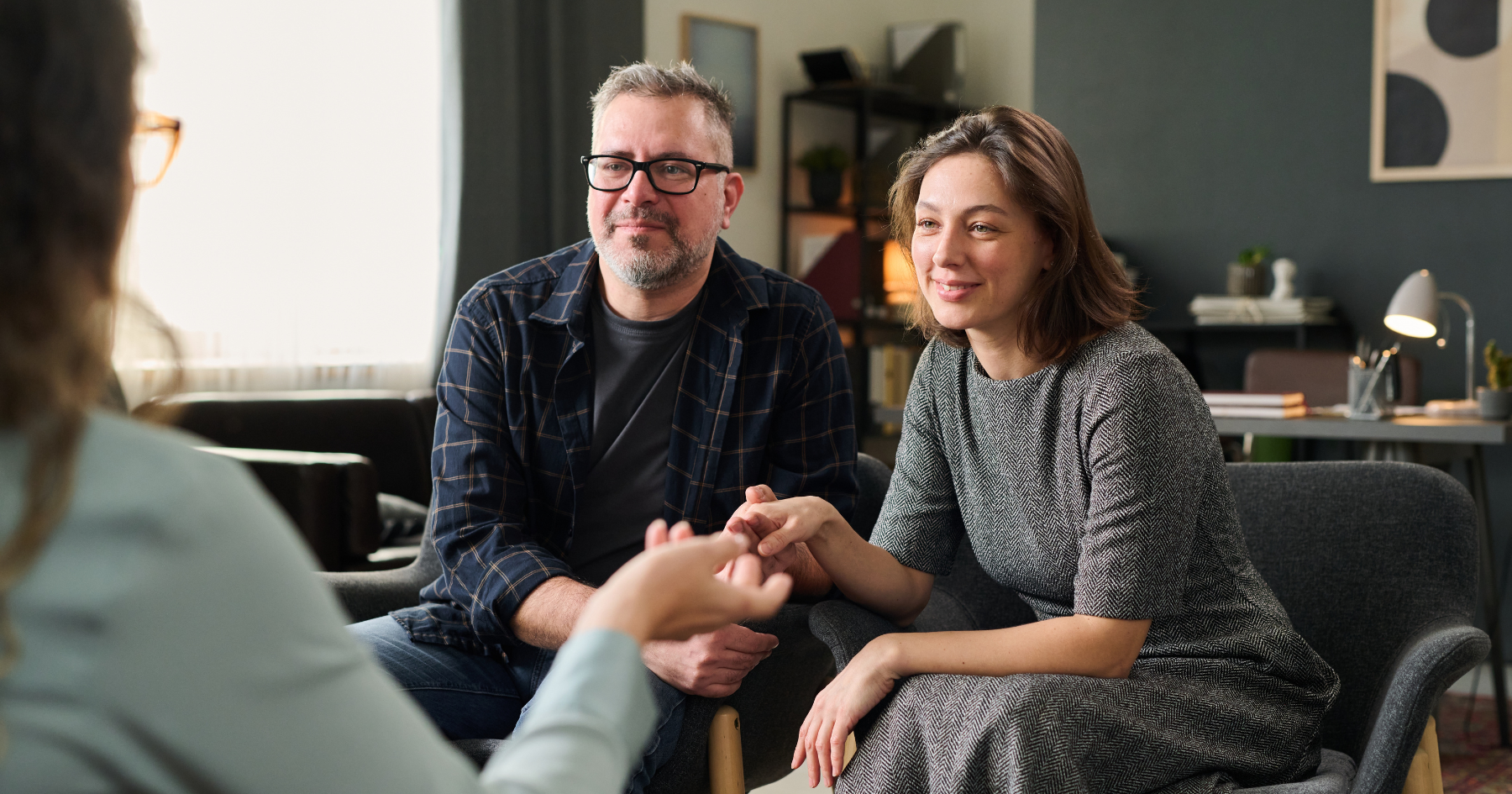
Family counseling gives blended families a neutral space to talk about what is hard, without blame. A counselor who understands stepfamily dynamics can help the family:
- Set realistic expectations for how quickly relationships will form
- Clarify the stepparent’s role and agree on discipline
- Improve communication between children, parents, and stepparents
- Reduce co-parenting conflict between households
- Help children process loss, loyalty conflicts, and change
- Strengthen the couple’s partnership so they can face challenges as a team
Counseling for a stepfamily doesn’t always include everyone at once. Depending on your needs, sessions may involve the couple alone through couples and marriage counseling, the whole household, or one child through child and adolescent counseling.
The best time to seek help is often before problems become entrenched. Couples who meet with a counselor before they marry or move in together can plan for these challenges instead of reacting to them.
Frequently Asked Questions About Blended Families
There is no real difference. Both terms describe a family in which at least one partner has children from a previous relationship. “Stepfamily” is the older term, and “blended family” became popular in the 1990s.
Many families say the hardest part is the gap between expectations and reality. Parents often expect quick closeness, while children need time to grieve, adjust, and decide how they feel. Stepparent roles, discipline, and conflict between households are also common struggles.
Most stepfamilies need several years, often four to seven or more, to feel settled. Patience, realistic expectations, and consistent effort matter more than speed.
In the early years, it usually works best for the biological parent to handle discipline. The stepparent supports those decisions and focuses on building a relationship. As trust grows, the couple can agree together on how the stepparent’s role will expand.
Let the child decide. Pressuring a child to call a stepparent “Mom” or “Dad” can create loyalty conflicts with their other parent. A first name or a family nickname is perfectly fine.
Keep one-on-one time with each child, protect their relationship with their other parent, and let them share mixed feelings without judgment. Move at their pace, and keep some familiar routines and traditions in place.
Consider family counseling when conflict keeps repeating, a child seems withdrawn or angry, the couple disagrees often about the children, or co-parenting has become tense. Counseling is also helpful before remarriage, to prepare for challenges ahead of time.
Not always. A counselor may meet with the couple, the full household, or individual family members, depending on what will help most. Your counselor will help decide the best structure for your family.
Yes. Our counselors work with stepfamilies, remarried couples, and children adjusting to family changes. Trinity Family Counseling is located in Shelby Township, Michigan, and offers honest, heart-led counseling rooted in faith for families across Michigan.
More on Remarriage and Blended Families
- One Big Happy, Crazy, Accepting Blended Family: why the “Brady Bunch” ideal sets families up for disappointment, even when the children are adults
- Remarrying? What About the Kids?: what to consider for your children before you remarry
- Part-Time Fathering: The Odd Dad Out: for fathers adjusting to a stepfather in their children’s lives
- Step-Mothering: Entering the World of Another Woman’s Child: six practical guidelines for new stepmothers
Support for Your Blended Family
If your stepfamily is struggling, you are not alone, and it does not mean your family has failed. With patience and the right support, blended families can build relationships that are strong, respectful, and genuinely loving, even if they never fully “blend.” At Trinity Family Counseling, we help blended families, remarried couples, and children navigate these changes with compassion and practical tools. Contact us today or call 586-254-3663 to schedule an appointment.